
The Essential Dwarf Gourami Care Guide
-

- by Daniel Smith
- on
- last updated
- 1 Comments

Contents
- 1Dwarf Gourami - Quick Facts
- 2Dwarf Gourami
- 2.1Natural Habitat
- 3Types of Dwarf Gourami
- 3.1Dwarf Gourami
- 3.2Flame Red Dwarf Gourami
- 3.3Powder Blue Dwarf Gourami
- 3.4Cobalt Dwarf Gourami
- 3.5Turquoise / Neon Blue Dwarf Gourami
- 4Tank Setup for Dwarf Gourami
- 4.1Tank Size
- 4.2Habitat and Tank Conditions
- 4.3Decorations and Compatible Plants
- 5Dwarf Gourami Care
- 5.1Feeding & Diet
- 5.1.1Dwarf Gourami - Food Options
- 6Dwarf Gourami Tank Mates
- 7How many Dwarf Gourami in one Aquarium?
- 7.1How to tell Male & Female Dwarf Gourami apart?
- 8How To Breed Dwarf Gouramis
- 9Dwarf Gourami Common Diseases
- 9.1Dwarf Gourami Iridovirus
- 10FAQs
- 10.1More Reading
With their shimmering scales and elegant fins, Dwarf Gouramis (Trichogaster lalius) will brighten up any freshwater aquarium. One look at these little fish and it's easy to see why they're so popular among hobbyists.
Dwarf Gouramis hail from the densely vegetated rivers and rice paddies of South Asia. Their natural habitats have infused them with a peaceful demeanour and love of heavily planted tanks. Though slow-moving waters are their preference, Dwarf Gouramis have adapted well to life in our home aquariums.
While tiny in size, Dwarf Gouramis have huge personalities. The males will put on lively courtship displays to impress potential mates. And they diligently care for eggs and fry after spawning. Their antics and interactions will keep you captivated for hours.
Dwarf Gouramis come in a stunning array of colours and patterns. No two exhibit the exact same mix of electric blues, sunset reds, and warm honey tones.
So if you're seeking a few vibrant, lively and personality bursting new fish, Dwarf Gouramis will deliver.
Read on to learn everything you need-to-know before adding Dwarf Gouramis to your tank.
Dwarf Gourami - Quick Facts
| Dwarf Gourami Fact | Details |
| Scientific Name: | Trichogaster lalius |
| Care Level: | Easy |
| Native Region: | South Asia |
| Lifespan: | ~5 years |
| Size: | 4–4.5 inches |
| Family: | Osphronemidae |
| Diet: | Omnivore |
| Minimum Tank Size: | 20 gallons |
| Compatibility: | (Minor Male Aggression) |
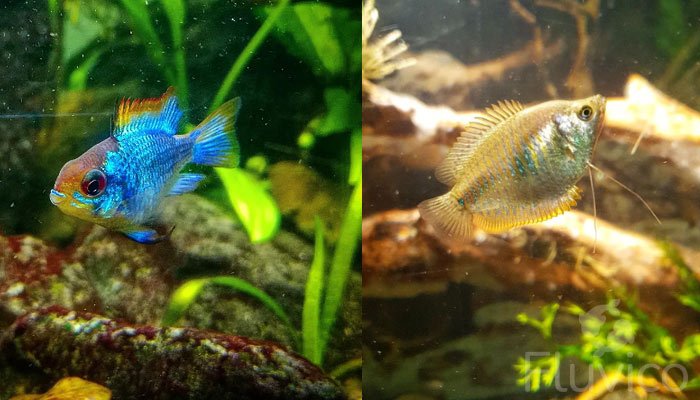
Dwarf Gourami
These small and curious fish typically reach a size of around 3.5-4 inches, making them perfect for a variety of medium+ tank sizes. That being said, the Gouramis love to swim and explore making them not ideal for nano-tank setups.
They display a vibrant mix of neon blue, rainbow and red/orange hues with each fish displaying an intricate and unique pattern. The Dwarf Gourami boasts a relatively long lifespan for a fish of its size, living up to 5 years in well-maintained aquarium conditions.
What sets this species apart is its labyrinth organ, a rare trait that allows it to breathe air directly from the surface. This means they can survive in lower-oxygen waters, replicating the conditions of their native slow-moving streams and rice paddies.
Natural Habitat
The Dwarf Gourami originates from South Asia (India and Bangladesh), inhabiting slow-moving freshwater environments (rivers, streams, and rice paddies) rich in vegetation (slightly acidic to neutral pH levels).
Types of Dwarf Gourami
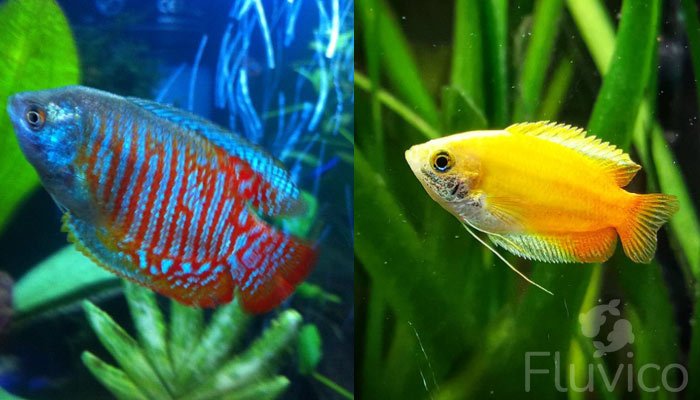
Within the Dwarf Gourami genus (Trichogaster lalius) there are many variations to choose from. Breeders of Dwarf Gourami are constantly trying to achieve new colours. Personality, size and tank parameters remain the same for each colour variation.
These are some of the most common types available:
Dwarf Gourami
With its vibrant red & blue horizontal stripes, it's easy to spot the dwarf gourami at your local aquarium store. Being one of the most colourful small freshwater fish, it's easy to see why it's become so popular.
Flame Red Dwarf Gourami
The Flame Dwarf Gourami ditches the blue, adding a touch of fiery elegance to your freshwater aquarium. With intense, deep red or orange hues that covers its entire body, reminiscent of glowing embers.
Powder Blue Dwarf Gourami
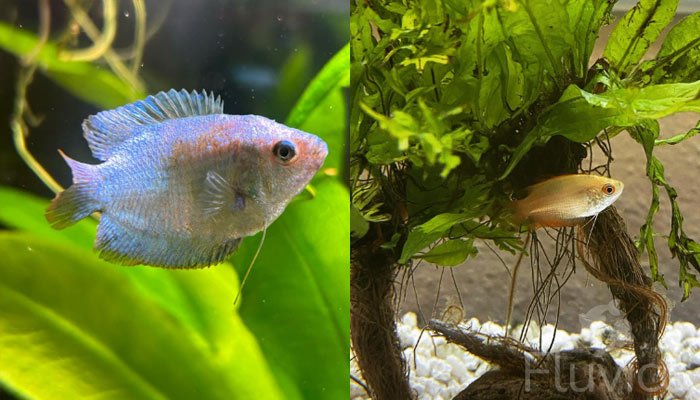
The Powder Blue Dwarf Gourami is a stunning, monochromatic variant of the classic Dwarf Gourami. Ditching the read, this variation has a captivating powder blue hue across its entire body, creating an enchanting contrast against your background plants.
Cobalt Dwarf Gourami
Cobalt Blue Dwarf Gourami sit between the Neon Blue and the Powder Blue variants with some offering a slight translucent effect through their bodies.
Turquoise / Neon Blue Dwarf Gourami
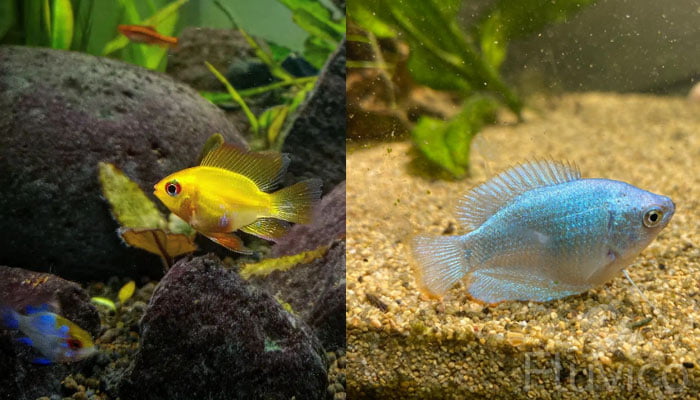
The Neon Blue Dwarf Gourami commands attention with it's vibrant all blue colouration. Rather than a pale powder blue, the Neon offers a deep blue neon hue to it's body. Depending on the grade of Neon Blue Dwarf Gourami, you may still have some red stripes showing through.
Tank Setup for Dwarf Gourami
Tank Size
Dwarf Gouramis, despite their small size, enjoy having room to swim and explore.
- Aim for a minimum tank size of 20 gallons.
- A standard 20-gallon long aquarium (30" x 12" x 12") provides ample horizontal swimming space.
This size allows for sufficient swimming space and the ability to establish territories, which is especially important if you plan to keep more than one Dwarf Gourami.
Anything under 10 gallons will cramp your Dwarf Gouramis. Bigger is better! A roomy tank makes it easier to maintain stable water parameters and gives you more aquascaping flexibility.
Habitat and Tank Conditions
- Tank Size: A minimum 20-gallon tank for adequate swimming space.
- Water Temperature: Preferably between 22°C to 28°C (72°F to 82°F).
- pH Level: Slightly acidic to neutral, around 6.0 to 7.5.
- Water Hardness: Soft to moderately hard, within a range of 4-10 dGH.
- Environment: Include plenty of plants for cover, replicating their natural habitat.
- Substrate: Soft, fine substrate to prevent damage to their delicate skin.
- Lighting: Moderate lighting, as they appreciate some shaded areas.
- Filtration: Gentle filtration is preferred as they thrive in slow-moving water.
- Aeration: Their labyrinth organ allows them to breathe air, so aeration is not a critical requirement.
- Maintenance: Regular water changes to maintain water quality and prevent the buildup of harmful toxins.
Decorations and Compatible Plants
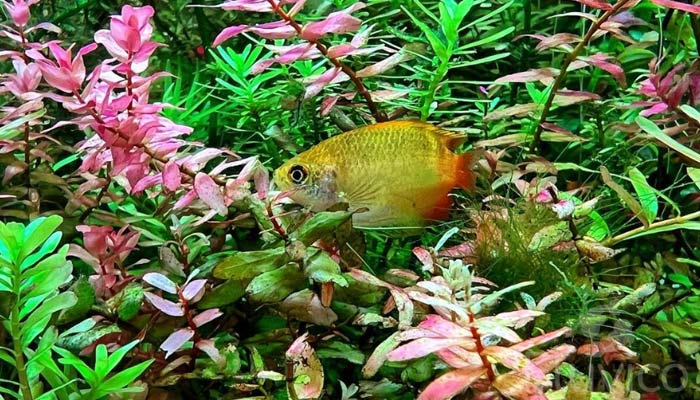
Heap on the plants! Include floating, stem, and rhizome varieties to give copious hiding spots.
Provide plenty of broad-leaf plants near the surface for resting. Driftwood and rock caves also make Dwarf Gouramis feel secure.
Decorations:
- Caves: Provide natural-looking caves or shelters for hiding, using aquarium-safe rocks or specially designed decoration pieces.
- Driftwood: Apart from offering additional hiding places, driftwood can contribute to a more natural-looking environment and slightly acidify the water, which Dwarf Gouramis prefer.
- Aquarium Background: Using a visually pleasing and calming background can help your fish feel more secure.
Compatible Plants:
- Anubias: This hardy plant can survive in a variety of conditions and does well in the slow-moving waters preferred by Dwarf Gouramis.
- Java Fern: Another robust plant, the Java Fern, provides excellent cover and doesn't require a lot of light.
- Water Sprite: A great floating plant that will provide shady areas and resting spots near the surface, which Gouramis will appreciate.
- Java Moss: This can provide excellent hiding spots and a foraging area for Dwarf Gouramis.
- Amazon Sword: These large, broad-leaved plants are excellent for providing cover and adding vertical interest to your tank.
Remember, Dwarf Gouramis like to explore and hide in the vegetation, so densely planted areas, combined with open swimming spaces, will make your Gouramis feel at home.
Dwarf Gourami Care
Feeding & Diet
With the proper diet, your Dwarf Gouramis will exhibit vivid colouration and remain active and healthy for years to come.
Dwarf Gouramis are omnivores and require a balanced diet of both plant-based and protein-rich foods. Their diet in the wild consists of small invertebrates, algae, and other plant matter, so we want to replicate this in the aquarium.
Fun Fact: Your Dwarf Gourami might just take care of those tiny Mystery Snail for you. We've found it's 50/50 whether they take a liking to small snail snacks. Large snails have nothing to worry about.
You can choose to feed them once or twice daily, giving only as much food as they can consume in a few minutes. Overfeeding with dry food can lead to poor water quality and over time health problems.
Dwarf Gourami - Food Options
- High-quality flake or pellet food: This should form the basis of their diet. Look for varieties that contain both plant and animal ingredients.
- Live or frozen foods: Foods such as brine shrimp, daphnia, and bloodworms can provide a great source of protein without worrying about water quality issues from overfeeding. These can be offered as a treat and are especially useful when encouraging Dwarf Gouramis to breed.
- Vegetables: Blanched peas, spinach, and zucchini can be chopped into small pieces and added to the tank. These provide necessary nutrients and dietary fibre.
- Algae Wafers: Occasionally, you can provide algae wafers as a supplement to their diet.
Dwarf Gourami Tank Mates
Choosing tank mates for Dwarf Gouramis should be done with care, as they are a mostly peaceful fish that can be stressed by overly aggressive or very active species.
Here are some ideal companions:
- Tetras: Small and peaceful species like Neon Tetras or Cardinal Tetras can make excellent tank mates.
- Rasboras: Harlequin Rasboras and other similarly sized species can be a good match.
- Catfish: Peaceful bottom dwellers like Corydoras or smaller Plecostomus species can be a good choice, as they occupy a different area of the tank and are not seen as competition.
- Loaches: Smaller loach species like Kuhli Loaches can also be a good match.
How many Dwarf Gourami in one Aquarium?
Keeping Dwarf Gouramis together in the same tank can be a delightful experience, but it requires some careful consideration.
Despite their peaceful nature, Dwarf Gouramis are somewhat territorial, particularly the males. To minimize aggression, it's advisable to keep one male with several (2-3) females, which helps distribute the male's attention and reduces the chance of any one fish being constantly harassed.
If you plan to keep multiple males in the same tank, you'll want to make sure the aquarium is large enough & densely planted to provide sufficient territory for each fish.
How to tell Male & Female Dwarf Gourami apart?
Telling male and female Dwarf Gouramis apart is fairly straightforward. Here are some pointers to help you differentiate between the sexes:
- Dorsal Fin (Most Important):
- Male: The dorsal fin is long and pointed.
- Female: It's shorter and more rounded.
- Colour and Patterns:
- Male: Brighter and more vibrant in colour than their female counterparts.
- Female: Generally more muted in colour.
- Body Shape:
- Male: Slimmer/ more streamline..
- Female: A bit bulkier, especially when carrying eggs.
- Behaviour:
- Male: More territorial and might display aggressive tendencies, especially towards other males.
- Female: Generally more docile.
How To Breed Dwarf Gouramis
Setup:
Environment:
Diet:
Introduce Pair
Mating
Post-Spawning Care
Fry Care
Gradual Transition
Dwarf Gourami Common Diseases
Dwarf Gouramis can be susceptible to various diseases. Here are some common ones:
- Ich (Ichthyophthirius multifiliis): This is a common parasitic disease that can affect Dwarf Gouramis.
- Presenting as white spots on the fish's body and fins.
- Fin Rot: This bacterial infection results in frayed or disintegrating fins.
- It can be treated with antibacterial medications. Good water quality can help prevent this disease.
- Bacterial Infections: Symptoms can vary widely but often include lethargy, loss of appetite, and unusual spots or growths on the body.
- Treatment usually involves water changes and antibacterial medications.
As always, maintaining high water quality, feeding a balanced diet, and avoiding stress are the best ways to prevent disease in your Dwarf Gouramis.
Dwarf Gourami Iridovirus
Dwarf Gourami Iridovirus (DGIV) is a highly infectious and typically fatal disease that specifically affects Dwarf Gouramis. The disease is caused by a strain of the megalocytivirus, a type of iridovirus.
The virus targets the fish's internal organs, causing inflammation and tissue damage. Symptoms of infection can include:
- Loss of appetite
- Lethargy
- Pale colour
- Bloated body
- Sores or ulcers on the body
Unfortunately, there is currently no known cure for Dwarf Gourami Iridovirus, making prevention and early detection crucial. Quarantining new fish and maintaining excellent water quality can help reduce the risk of DGIV.
It's worth noting that fish affected by DGIV should be humanely euthanised to prevent the spread of the disease to other fish in the aquarium, and the tank should be thoroughly disinfected. Always remember to handle your fish and aquarium equipment with care to prevent the spread of this and other diseases.
FAQs
How many Dwarf Gouramis should be kept together?
Can you keep 1 Dwarf Gourami?
How many times a day should I feed my Dwarf Gourami?
Do Dwarf Gourami eat shrimp?
Why Is My Dwarf Gourami Laying on Its Side?
Why is my Dwarf Gourami aggressive?
More Reading

Daniel Smith
Daniel Smith is a passionate aquarium hobbyist specializing in freshwater fish, plants, and aquarium ecosystems. With years of experience, he offers valuable insights and practical tips to create harmonious and thriving underwater environments. Daniel's commitment to responsible fishkeeping and natural habitats shines through his engaging writing, empowering both beginners and seasoned enthusiasts. Join him on a captivating journey into the world of aquariums, where his expertise and passion inspire and enrich hobbyists across the world.
Top Posts


Thanks. Your comment was sent for approval.
Comment submission failed. Please check the form and try again.